Cub petting at the Lion Park: captive breeding and canned hunting
For years, visitors to the Lion Park could hold a lion cub. The lion cub petting South Africa's tourist trade sold as a close wildlife encounter was routine at the park, and it attracted more sustained criticism than anything else on the property.
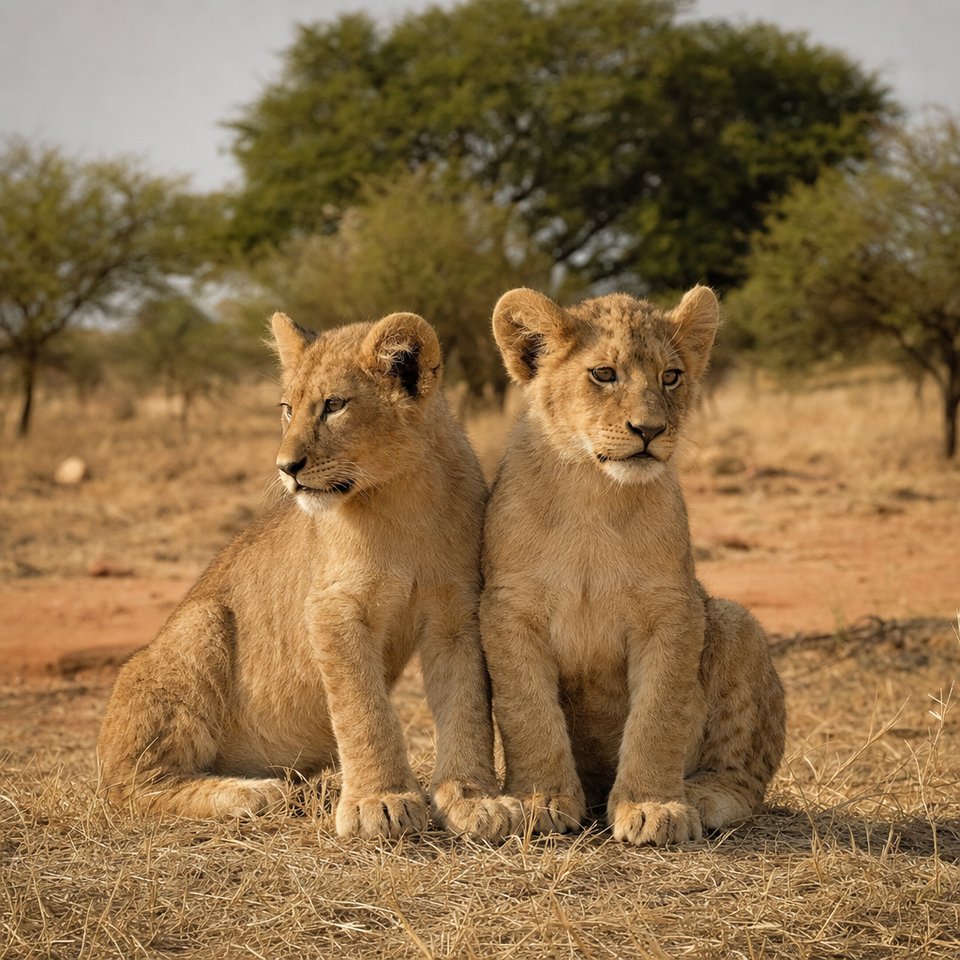
The Lion Park was a drive-through wildlife park in Gauteng, north-west of Johannesburg at Honeydew, near Lanseria, on a road that day visitors already took toward the Cradle of Humankind. The usual arrangement was that people stayed in their own vehicles and drove at walking pace through fenced camps holding lions and other predators. Cub petting inverted that arrangement. The visitor got out.
One question sits underneath the whole subject: what is canned hunting, and what does it have to do with a cub in a tourist's arms? At first glance the two have nothing in common. Most conservation writing on captive lions over the past decade has argued that they are the first and the last link in one chain.
What cub petting involved at the park
Cub petting is what the name says it is. Lion cubs young enough to be handled without danger are kept in an enclosure, and paying visitors sit with them, stroke them, and are photographed holding them. At the Lion Park the practice ran for years, and it was one of the reasons people made the drive out of the city. It photographed well. The photographs travelled a good deal further than the park itself.
Animals used this way are hand-raised. A cub that will be handled by strangers every day cannot stay with its mother: a lioness with cubs is dangerous to approach, and a cub that is going to tolerate being picked up has to be used to people from the start. Hand-raising means bottle-feeding, and bottle-feeding around the clock means staff, or something that does the work of staff. That is the seam where the petting enclosure joins the rest of the operation, and it is the seam that critics kept pulling at.
The park was not unusual in offering it. For a long stretch, cub petting was a standard item on the South African wildlife-tourism menu, sold alongside game drives and predator feeds. What made this particular park prominent was where it stood: close to Johannesburg, on a route that day-trippers and tour operators already used, and photogenic enough to end up in a great many holiday albums and a fair number of celebrity ones.
The usable window is narrow. A cub is handled from a few weeks old until it is a few months old, at which point strength and teeth end the encounter for good. Every petting enclosure therefore turns its animals over more than once a year, and a visitor returning the following season meets different lions in the same blanket. None of that is apparent from inside the enclosure, and it is the most consequential thing about the activity.
Where the cubs came from: captive breeding in South Africa
A petting enclosure needs a continuous supply of small cubs, because cubs stop being small. Once an animal is a few months old it is too strong and too unpredictable to hand to a member of the public, and it has to be replaced. The enclosure therefore runs on a rate of production, not on a stock of animals.
Captive breeding supplies that rate. Taking cubs from a lioness shortly after birth brings her back into breeding condition sooner than she would come on her own, so a female in a breeding facility can produce far more litters in her life than a lioness raising her own young would. Captive breeding of lions in South Africa grew into an industry on that arithmetic, and by animal numbers it is now larger than the country's wild lion population.
Very little of this is visible from a petting enclosure. The visitor sees a cub on a blanket. The breeding sheds are somewhere else, often on a different property under different ownership, and the two ends of the arrangement are rarely described to the public in the same sentence. The captive lion breeding industry in South Africa is the context the petting encounter sits inside, and it is not a small one.
What is canned hunting, and where a hand-raised lion fits
Two questions come up more than any others when people meet this subject for the first time. What is canned hunting, and is it legal? The first has a reasonably settled answer. A canned hunt is one in which the animal is shot inside an enclosure it cannot leave, having usually been bred in captivity and, in the cases that generate the most anger, having been raised around people and so having no particular fear of them. The second question has no single answer: the law differs by province, it has been rewritten more than once, and a great deal turns on how any given hunt is described on paper.
The connection conservation groups draw is a sequence, not a single transaction. Cubs are bred and taken from their mothers. Tourists and volunteers pay to raise and hold them. The animals grow past petting age and are used for walking encounters. They grow past that too, and some of them are sold on. Where they are sold on to is the part the tourist never sees. Enclosed trophy hunting is one destination for a surplus captive lion. The trade in lion bones is another.
Operators have consistently said that their own animals do not follow that route, and for any individual cub the claim may well be true. The criticism is aimed at the structure instead of at any one animal: an industry that breeds far more lions than it can house for their full lifespan has to move them out at the far end, and the legal markets for an adult captive-bred lion are narrow.
The Lion Park made that argument itself, in writing. After an American television segment in 2014 put the question to it directly, the park published a statement disputing how the programme had been made — and, in the same document, conceding that some lions it had sold in the past had ended up on hunting farms, which it said followed from a policy its staff had not applied consistently. What the 2014 statement said is summarised in a note on this site; the original is not reproduced, because it reprints private correspondence.
The term itself is contested. Breeders and parts of the hunting sector reject it as a slur that lumps careful operations in with the worst of them, and prefer captive-bred hunting, which names the animal's origin rather than the conditions of the shot. Critics answer that the origin is the whole point, and that an enclosure large enough to be called a hunting area is still an enclosure. The argument about what to call the practice has outlasted several attempts to regulate it.
Walking with lions, the stage in between
Walking with lions is the intermediate product. It puts tourists on foot alongside sub-adult animals, usually with handlers, on a track through open ground. It uses lions that have outgrown the petting enclosure and are not yet strong enough to make the activity impossible. That window is short, which is one of the reasons the activity has drawn the same criticism as the enclosure that feeds it.
The volunteer programme
Hand-raising is expensive in labour, and a volunteer programme turns that cost into income. International volunteers paid for the chance to work with the animals, feeding and caring for cubs, generally on the understanding that this was conservation work. The volunteer programme at the Lion Park was one of the better-known examples in the country, and it is why the park still appears in so much writing aimed at people planning a gap year.
Oyster.com, which reviews volunteer placements, listed the park among the most controversial animal attractions, and published that assessment in five languages.
The criticism
The argument against the practice was made for years by conservation organisations, by some zoo professionals and by a number of former volunteers, and it reached a far wider audience through the documentary Blood Lions. The film's case was that the petting encounter is the friendly, public-facing end of a breeding industry whose economics do not work without a market for grown animals. The lion cub petting South Africa's operators described as an educational experience was, on that reading, the shop window and not the business.
Not all of the criticism was that structural. Some of it was narrower and more immediate: that a cub handled by dozens of strangers a day is a stressed animal; that a hand-raised lion cannot be returned to the wild and is therefore not a conservation output in any sense the word usually carries; and that a visitor who has paid to hold a cub is being sold a story the operation is not in a position to deliver.
Operators answered on two levels. On the first they disputed the connection: their own cubs were not destined for a hunt, their breeding served education, and the charge was being laid against an industry, not against them. On the second they argued that the encounter has value in itself, because a visitor who has held a lion cub cares about lions afterwards and may give money or votes to their protection. That second claim is asserted far more often than it is tested.
Oregonlive, writing about the hunting end of the same industry, described breeders producing what it called Frankenstein freaks of nature.
The park's announcement that it would bar cub petting
The park later announced that it would stop allowing visitors to pet lion cubs. The decision was carried well outside South Africa, including by the San Diego Union-Tribune and by Michigan's Thumb, under a headline that put it plainly.
South African park to bar petting of lion cubs.
As reported — San Diego Union-Tribune · Michigan's ThumbWhat the announcement did not do was end the practice in the country. Cub petting continued to be offered elsewhere in South Africa afterwards, and the wider argument about captive breeding moved on from individual attractions to national policy.
After the rebrand
The operation continues today under a different name and at a different site, trading as Lion & Safari Park near Hartbeespoort. What is or is not offered there now is a question for that business, at an address that has nothing to do with the one in the coverage.
The older name is the one attached to the coverage. Searches for it still return the cub petting stories, the volunteer reviews, and the death of an American visitor in 2015, all of them filed under an address the operation no longer uses.